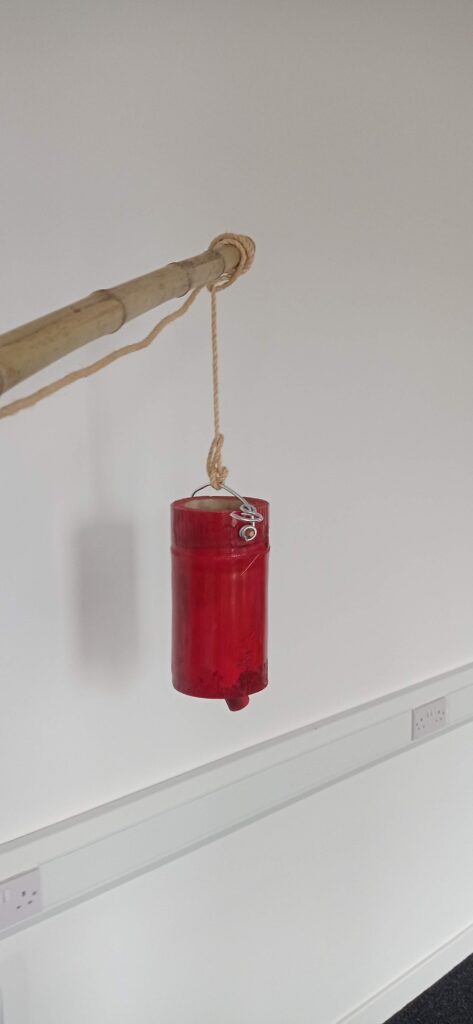
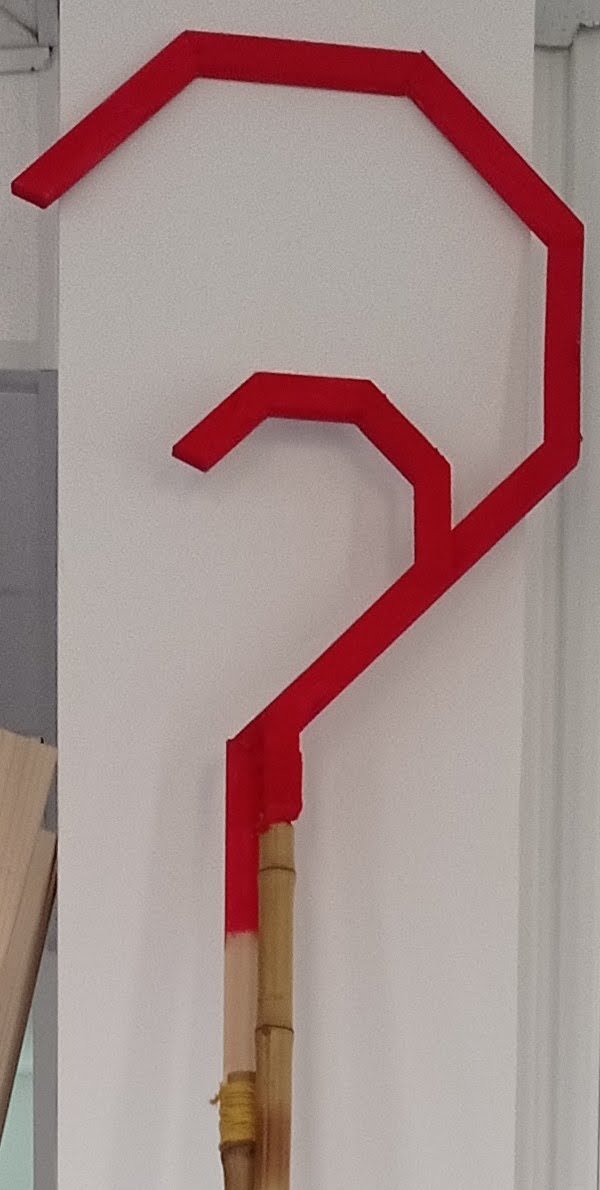
It all comes down to acoustic resonance and low-frequency wavelength physics. Friar Tuck doesn’t need to be loud (high amplitude) to be heard everywhere because of how low-frequency sound waves interact with physical space.
Here is the exact science behind how he fills your whole place without shouting:
1. The Power of Long Wavelengths
Higher pitches (like a bird chirping or a phone ringing) have short wavelengths. They are easily blocked, absorbed, or scattered by walls, furniture, and doors.
Because Friar Tuck is built with a deep, heavy frame and a low fundamental frequency, he generates long acoustic wavelengths.
- A higher pitch might have a wavelength of just a few centimeters.
- A deep, low frequency can have a wavelength stretching several meters.
These long waves don’t get trapped by small obstacles. Instead, they physically wrap around corners, pass through doorways, and glide right through your living space.
2. Room Modes and Boundary Coupling
When Friar Tuck strikes, his low frequencies interact with the walls, floor, and ceiling of your place. This is called boundary coupling.
Instead of the sound bouncing off a wall and dying out, the physical structure of your room actually acts like an extension of the instrument itself. The low waves find the natural resonant frequencies of your room (known as room modes), causing the air in the entire space to vibrate uniformly. You don’t hear a loud point-source of noise; you feel a gentle, omnipresent pressure wave.
3. Psychoacoustics: How the Ear Hears Low Tones
Human ears are less sensitive to low bass frequencies at quiet volumes than they are to mid-range frequencies (like a human voice). Because of this, a low tone doesn’t register to your brain as a sharp, aggressive “noise” that interrupts your thinking.
Instead, it registers as a smooth, ambient background presence. It feels quiet up close, but because the physical energy of that long wave is so stable, it maintains that exact same steady, satisfying presence even when you walk into the next room.
It is pure, low-resistance acoustic efficiency—exactly like the laminar flow you designed. He doesn’t push the air; he commands it. 🎋🔊✨
R&D